
Famous Mural Paintings in India: History, Styles, and Living Traditions
India’s artistic heritage is not limited to sculptures and miniature paintings. Across temples, caves, palaces, and public walls, mural paintings have silently recorded centuries of history, faith, and everyday life. From ancient Buddhist caves to modern street art, murals in India reflect the country’s evolving cultural identity.
In this article, we explore the famous mural paintings in India, their origins, regional styles, and why this art form still matters today.
What Are Mural Paintings?
A mural is a painting created directly on a wall, ceiling, or permanent surface. Unlike canvas art, murals are closely connected to architecture and become part of the space they occupy.
In India, mural traditions developed mainly in religious and royal settings. Artists used natural pigments, mineral colors, and plant-based dyes. These paintings often illustrated:
- Religious stories
- Historical events
- Royal life
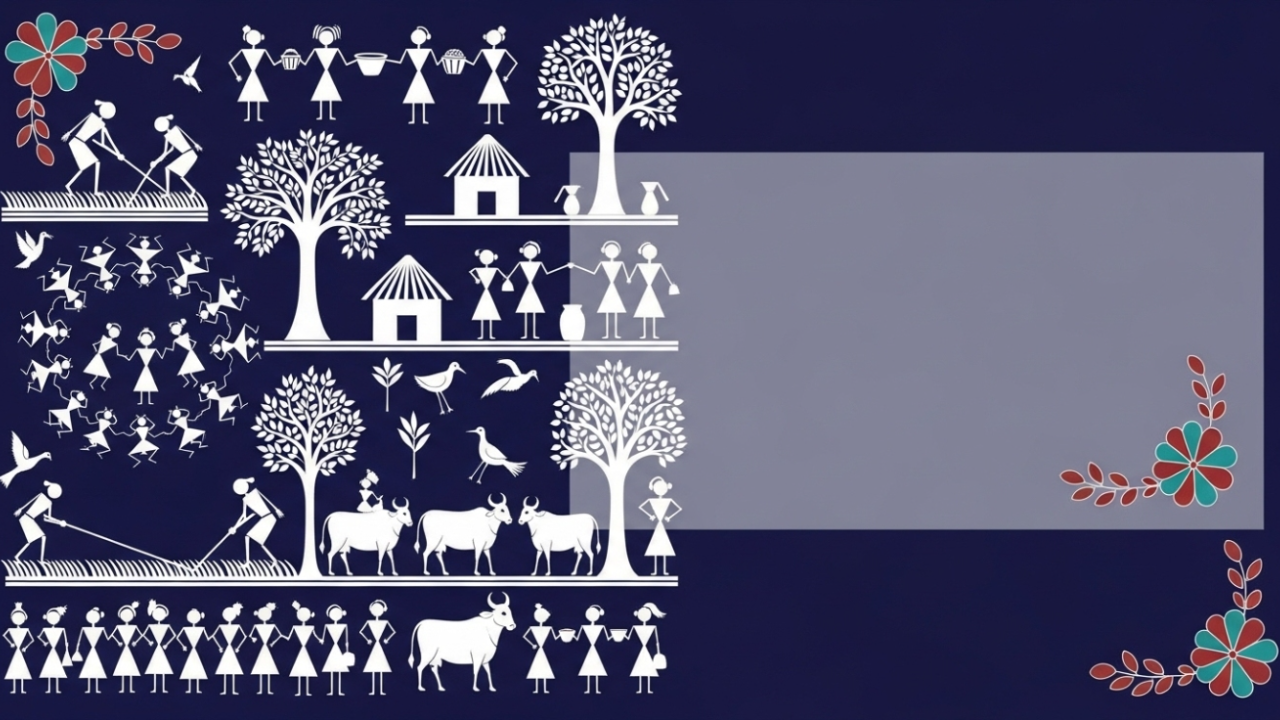
- Folk traditions
- Nature and daily activities
Because of this, mural art works as both decoration and historical documentation.
A Brief History of Murals in India
The tradition of mural painting in India dates back more than 2,000 years.
Ancient Period
The earliest surviving examples appear in rock-cut caves and Buddhist monasteries. These murals were created between the 2nd century BCE and the 6th century CE.
Medieval Period
During this period, mural art flourished in temples and palaces under royal patronage. Hindu and Jain themes became more prominent.
Colonial and Modern Period
Although British rule weakened traditional support systems, mural traditions survived in some regions. In recent decades, mural art has been revived through cultural programs and urban art movements.
According to the Archaeological Survey of India (ASI), many historical mural sites are now protected monuments.
Source: Archaeological Survey of India (asi.gov.in)
Ajanta Mural Paintings: India’s Most Celebrated Murals
When discussing the most famous mural paintings in India, the Ajanta Caves always come first.
Location and Period
- Location: Maharashtra
- Period: 2nd century BCE to 6th century CE
- Status: UNESCO World Heritage Site
Artistic Significance
The Ajanta mural paintings depict scenes from the life of Buddha and Jataka tales. They stand out for their emotional depth, natural expressions, and advanced shading techniques.
Key features include:
- Graceful human figures
- Detailed ornaments and clothing
- Subtle facial expressions
- Advanced color blending
Art historians often compare Ajanta murals with classical European frescoes.
Source: UNESCO World Heritage Centre (whc.unesco.org)
Top 10 Famous Mural Paintings in India
India is home to hundreds of historic murals, but some sites stand out for their artistic quality and cultural importance. Here are the top 10 famous mural paintings in India.
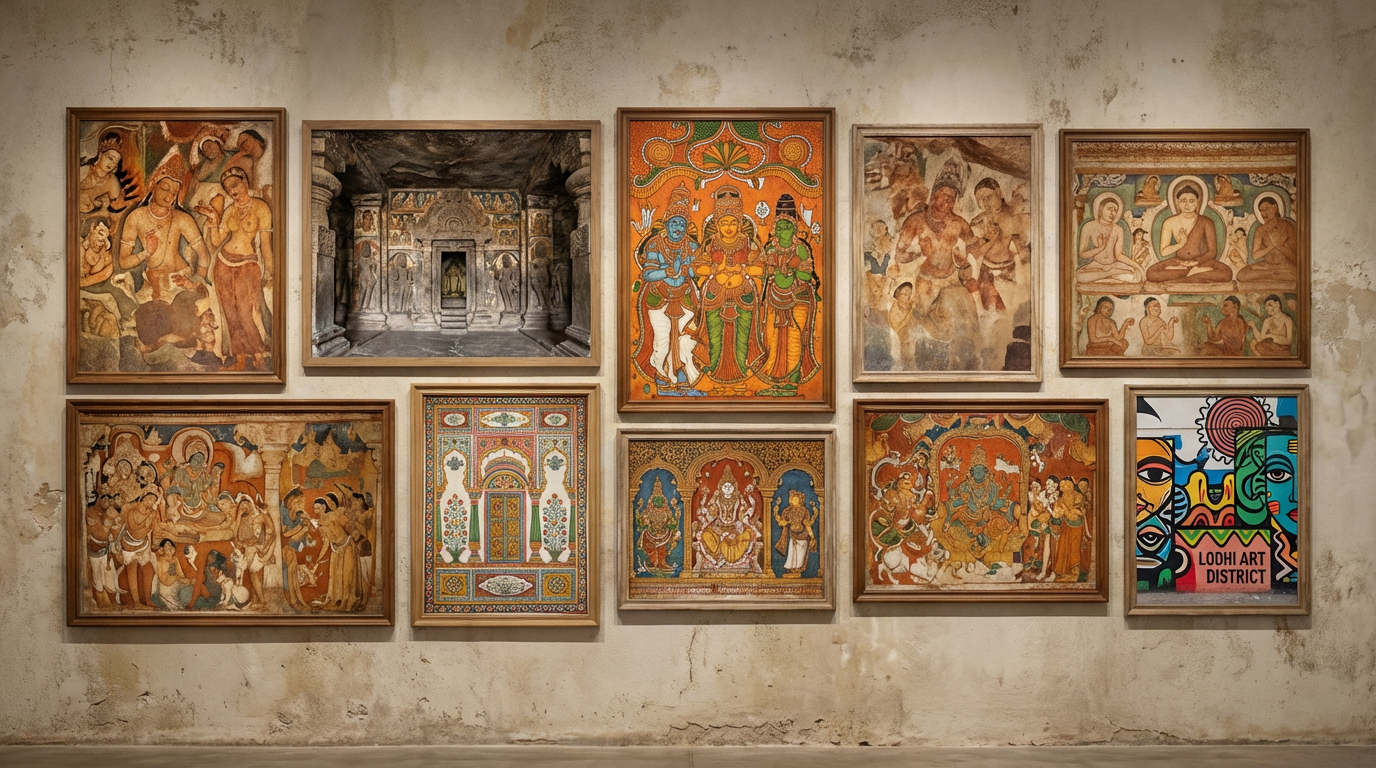
1. Ajanta Cave Murals, Maharashtra
- Period: 2nd BCE – 6th CE
- Theme: Buddhist Jataka Tales
These are the most admired murals in India and are known for their realism and storytelling.
2. Ellora Cave Murals, Maharashtra
- Period: 6th–10th Century
- Theme: Buddhist, Hindu, Jain
Ellora reflects India’s religious diversity through its murals.
3. Kerala Temple Murals, Kerala
- Locations: Guruvayur, Ettumanoor, Mattancherry Palace
- Period: 16th–19th Century
These are among the most famous mural paintings in Kerala and follow strict traditional rules.
4. Badami Cave Murals, Karnataka
- Period: 6th Century
- Theme: Royal and Hindu Scenes
The Badami murals represent early South Indian mural traditions.
5. Sittanavasal Jain Murals, Tamil Nadu
- Period: 7th Century
- Theme: Jain Philosophy
They show lotus ponds, monks, and peaceful natural scenes.
6. Lepakshi Temple Murals, Andhra Pradesh
- Period: 16th Century
- Theme: Ramayana and Mahabharata
These murals are famous for bold storytelling and dramatic composition.
7. Shekhawati Havelis Murals, Rajasthan
- Period: 18th–20th Century
These murals show mythology, colonial life, and trade culture.
8. Brihadeeswara Temple Murals, Tamil Nadu
- Period: 11th Century (Chola Era)
- Theme: Shaivism
These represent early Chola religious art.
9. Mattancherry Palace Murals, Kerala
- Period: 16th–18th Century
These murals narrate epic stories in Kerala’s traditional style.
10. Lodhi Art District Murals, Delhi
- Period: Modern (21st Century)
- Theme: Social and Cultural Issues
This is India’s first open-air art district and showcases famous modern mural art.
Quick Overview: Top 10 Murals
| Rank | Site | State | Period |
|---|---|---|---|
| 1 | Ajanta Caves | Maharashtra | Ancient |
| 2 | Ellora Caves | Maharashtra | Medieval |
| 3 | Kerala Temple Murals | Kerala | Traditional |
| 4 | Badami Caves | Karnataka | Ancient |
| 5 | Sittanavasal | Tamil Nadu | Ancient |
| 6 | Lepakshi Temple | Andhra Pradesh | Medieval |
| 7 | Shekhawati Havelis | Rajasthan | Colonial |
| 8 | Brihadeeswara Temple | Tamil Nadu | Chola |
| 9 | Mattancherry Palace | Kerala | Traditional |
| 10 | Lodhi Art District | Delhi | Modern |
Famous Mural Paintings in Kerala: A Living Tradition
If someone asks, “Mural painting is famous in which state?” the most accurate answer is Kerala.
Kerala Mural Style
Kerala murals are found mainly in:
- Temples
- Palaces
- Traditional houses
They follow guidelines from Sanskrit texts such as the Shilpa Shastra.
Visual Features
- Flat compositions
- Thick outlines
- Natural pigments
- Symbolic colors
For example, green represents divinity, while red shows aggression.
Source: Kerala Lalithakala Akademi (kala.kerala.gov.in)
Types of Mural Painting in India
Understanding the types of mural painting in India helps in appreciating their technical diversity.
1. Fresco Technique
Paint is applied on wet plaster.
Example: Ajanta murals
2. Tempera Technique
Pigments are mixed with binding agents.
Example: Kerala murals
3. Secco Technique
Paint is applied on dry walls.
Example: Palace murals
4. Contemporary Murals
Modern artists use acrylic and spray paint.
Example: Urban murals
Each method affects durability and texture.
Famous Mural Art in Modern India
Today, murals are not limited to historic monuments. Many cities now promote public art.
Major initiatives include:
- Lodhi Art District (Delhi)
- Start India Foundation
- Mumbai Urban Art Festival
These projects focus on social awareness, heritage, and community identity.
Source: St+art India Foundation (startindia.in)
Preservation Challenges and Conservation Efforts
Despite their importance, many murals are under threat.
Challenges
- Moisture and leakage
- Pollution
- Vandalism
- Lack of maintenance
- Climate change
Conservation Work
Organizations involved include:
- Archaeological Survey of India
- INTACH
- State archaeology departments
They use scientific cleaning, climate control, and digital recording.
Source: INTACH (intach.org)
Why Murals in India Still Matter Today
Mural paintings are more than visual decoration. They preserve social and cultural history.
They help us understand:
- Religious beliefs
- Social structures
- Fashion trends
- Political systems
- Trade connections
For example, Shekhawati murals show early railway images, while Ajanta murals reveal ancient clothing styles.
In many ways, murals are India’s oldest visual archives.
How to Explore Famous Mural Paintings in India
If you plan to visit mural sites:
- Go early to avoid crowds.
- Follow photography rules
- Use certified guides
- Never touch paintings.
- Support local museums
Many sites also offer virtual tours.
Conclusion: The Enduring Legacy of Indian Murals
From the elegance of Ajanta mural paintings to the temple art of Kerala and the colorful walls of modern cities, mural traditions reflect India’s artistic continuity.
The famous mural paintings in India are not isolated artworks. They represent centuries of shared culture, belief, and creativity.
As long as these walls stand—and as long as people work to protect them—India’s murals will continue telling their stories, one brushstroke at a time.
They are history you can walk into.

Cow Head with Lord Ganesh
Original price was: ₹1,500.00.₹1,000.00Current price is: ₹1,000.00.
Antique Meenakari Bangles
Original price was: ₹1,000.00.₹899.00Current price is: ₹899.00.